













An impressive 86 percent of Americans “have a favorable to extremely favorable view of adoption,” according to the Charlotte Lozier Institute. Still, the yearly ratio of abortions to adoptions approaches 50 to 1, indicating that much more education is needed to help pregnant women see adoption as a viable option.
By Maria V. Gallagher
It was one of those friendships that was formed online — a social media connection that has lasted for a number of years. I do not recall exactly when Melanie became my Facebook friend, but I have always been impressed by her lovely pro-life posts that often feature stunning photos of newborn babies.
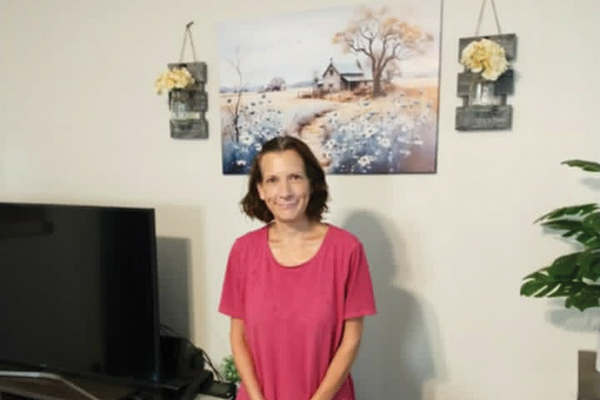
What I did not know until quite recently was that Melanie has her own incredible pro-life story to tell — one that exemplifies self-sacrifice and the power of love.
The Rosary intervenes
Melanie was a single mother in her 20s, raising a toddler in the San Francisco Bay Area, when she became pregnant. The father — whose ex-wife had had an abortion — did not want Melanie to carry the baby to term. A close relative also pressured Melanie to abort.
But Melanie wanted to fight valiantly for the life of her child. She recalled seeing a sign outside a Catholic church, offering assistance for pregnant women in need. She drove over to the church, but found the doors locked. However, a nearby chapel seemed to beckon her. Inside, a group of the faithful were praying a Rosary — for the unborn.
She saw it as a sign from Heaven and an answer to her prayers.
Melanie confided in one of the women in the chapel, who accompanied her to the Birthright of Livermore pregnancy resource center. There, she found a compassionate counselor who helped her to begin the journey which would lead to an open adoption. She read a letter headlined “Meet the McGees” and chose the couple, who had been waiting for a child for 20 years, to adopt her baby.
But then came the ultimate surprise. During a routine ultrasound when she was five months pregnant, Melanie learned she was not carrying one baby, but two. The McGees met the double blessing with joy, and agreed to adopt both the boy and the girl.
Legacy of love
That was 26 years ago. Melanie ultimately married and gave birth to another child. Over the years, she has kept in contact with the twins with cards, letters, and phone calls. Melanie, in turn, became a strong champion for life, participating in the 40 Days for Life campaign, a peaceful, prayerful program of pro-life advocacy that is waged outside abortion facilities.
Melanie offers this advice to a pregnant woman considering placing her child for adoption: “Prayerfully consider it. It is a loss with grief involved, so find resources and friends who can help you navigate the process with encouragement and love.”
She also recommends finding out about the different types of adoption options available. For instance, in an open adoption — which Melanie chose — the birth mother and adoptive family share a good deal of communication. The adopted child grows up knowing his or her birth mother and having a relationship with her.
In a semi-open adoption, the adoptive mother and father provide the birth mother with updates about the child’s maturation. Contact is greatest during the birth mother’s pregnancy and right after the birth. Meanwhile, in a closed adoption, the birth mother and the adoptive couple do not have ongoing contact.
While closed adoptions were commonplace in years past, today most adoptions have some level of openness.
Adoption = mercy in action
The Charlotte Lozier Institute helps advise the pro-life movement through statistical and medical research. The Institute notes that adoption “does have a broad, strong cultural appeal.” An impressive 86 percent of Americans “have a favorable to extremely favorable view of adoption,” according to Lozier. Still, the yearly ratio of abortions to adoptions approaches 50 to 1, indicating that much more education is needed to help pregnant women see adoption as a viable option.
For instance, the Lozier Institute recommends that information about adoption be included as a required part of a high school curriculum. Funding for counseling, post-natal care, and other support services for birth mothers can also be helpful in promoting adoption.
For her part, Melanie says it is important to “let the ladies know that they are already wonderful mothers by loving their babies and wanting the best for them.”
Visit OptionLine.org to locate a pregnancy resource center near you, or call 1-800-712-4357.
Maria Gallagher is the author of Mercy’s Power: Inspiration to Serve the Gospel of Life and Glorious Encounters with Mary: A Guide to Living the Mysteries of the Rosary, both available on ShopMercy.org.
Photo by Kenny Eliason on Unsplash.
{shopmercy-ad}