














Rewriting the Marian Constitutions, Bl. George included the spreading of devotion to the Sacred Heart, which, because of its similarity to Divine Mercy, prepared the Congregation to embrace and spread that message as well.
By Fr. Jim McCormack, MIC
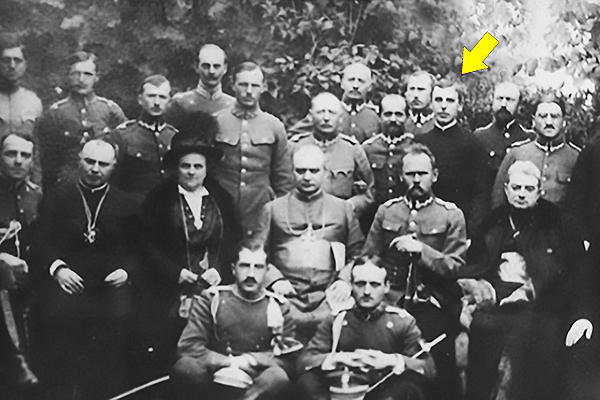
On Jan. 27, we celebrate the feast of Blessed George Matulaitis, the priest who saved our Marian Congregation from extinction in 1909 when only one Marian remained.
He secretly joined, opened a novitiate in Switzerland, rewrote our Constitutions, became the bishop of Vilnius (Lithuania). Blessed George zealously served the Church until his death in 1927. By then, the Marians had grown to 319 members.
Marian and Merciful
Not only did God work through Bl. George to save our Congregation; He also worked through him to bring the message of Divine Mercy to the Marians — and, by extension, to the Marian Helpers. And we see the evidence of God’s providence when we consider the several connections between the lives of Bl. George and St. Faustina.
Blessed George (1871–1927) and St. Faustina (1905–1938) lived during overlapping years. Both suffered from tuberculosis — he of the bone, she of the lungs. Both grew up under the Russian Empire, with no border separating their homelands of Lithuania and Poland.
They lived only a few hundred miles apart and were both in Warsaw at the same time, at least briefly: Saint Faustina worked there as a nanny starting in July of 1924 and then entered the Sisters of Our Lady of Mercy — also in Warsaw — on Aug. 1, 1925. Blessed George had been in Warsaw during the summer of 1925 and left for Rome on Aug. 3.
Both felt called by God to enter a religious congregation and answered that call. Neither founded their religious institute, yet the contribution of both figures was so significant that Bl. George is known today as the Renovator of the Marians, and St. Faustina is retroactively called the Co-foundress of her community, the Sisters of Our Lady of Mercy.
Calling the confessor
Both also found themselves in Vilnius, although not at the same time. Blessed George was the bishop of that diocese from 1918-1925, and St. Faustina was sent there in 1929, two years after his death. There, another key figure connects them: Blessed Michael Sopoćko.
A priest of the diocese of Vilnius, Bl. Michael served under Bishop George, who, around 1924, called him back to Vilnius from Warsaw, where he had just completed his doctoral studies, and assigned him as confessor to St. Faustina’s community. Consequently, Bl. Michael became St. Faustina’s spiritual director. To this day, the original Divine Mercy Image remains in Vilnius — only a short 15-minute walk from Bl. George’s cathedral.
The connections continue. In 1917, a young man named Józef Jarzębowski met Bl. George and decided to enter the Marians. After St. Faustina’s death, then-Fr. Józef met Bl. Michael, who gave him various printed materials related to Divine Mercy, including his essay on the theological grounds for establishing the Feast of Mercy.
Fleeing Nazi persecution, Fr. Jarzębowski carried these materials safely to the United States — where the Marians had already been established by Bl. George in 1913. Without that foundation, the message might have remained hidden behind the Iron Curtain. Through Bl. George, God ensured that the message of Mercy would reach the world.
American province
Blessed George had also prepared the Marians to receive and to spread Divine Mercy. By saving the Congregation from extinction, he saved the Marian charism, centered on the Immaculate Conception, the greatest manifestation of God’s mercy in a human creature. Divine Mercy, then, was not foreign to Marian identity but at its very heart.
Furthermore, rewriting the Marian Constitutions, Bl. George included the spreading of devotion to the Sacred Heart, which, because of its similarity to Divine Mercy, prepared the Congregation to embrace and spread that message as well.
He also saw collaboration with the laity as an important part of our ministry, which paved the way for the Association of Marian Helpers, who have done far more to spread Divine Mercy than the Marians ever could have done alone. Thus, because of Bl. George, the Marians and Marian Helpers were primed and ready to carry the message of Divine Mercy to the world.
As we approach the 100th anniversary of Bl. George’s death next year, let us pray — through the intercession of St. Faustina — for his canonization!
Blessed George Matulaitis, Renovator of the Marians, pray for us!
{shopmercy-ad}